I discovered beekeeping out of curiosity, just as I had discovered design twenty years earlier—with the desire to understand how things organize, structure and work together. I did not know then that my hives would become one of the best design schools I had ever attended.
🐝 Observe before acting
The first lesson of beekeeping is also the most difficult: do not intervene immediately. When opening a hive, the instinct is to correct everything at once—a misaligned frame, a cell that looks unusual. An experienced beekeeper observes first, understands the system as a whole and acts only when it is genuinely necessary.
Design demanded the same discipline from me. Too often, junior designers—and I did the same early in my career—open the software before truly understanding the client's problem. Observation, questions and mapping the context belong at the beginning of the process, not at the end.
"A good design solution, like a good beekeeping intervention, begins with knowing what not to touch."
🍯 Patience as a professional tool
A hive produces honey at its own pace. You cannot speed up flowering or force bees to work faster. A beekeeper learns to work according to nature's timing, not human impatience.
In a profession where clients sometimes ask for a logo "by tomorrow morning," this lesson is valuable. The best visual identities I have created are those for which I took the time to explore, fail and begin again. Rushing produces mediocre work. Patience produces lasting work.
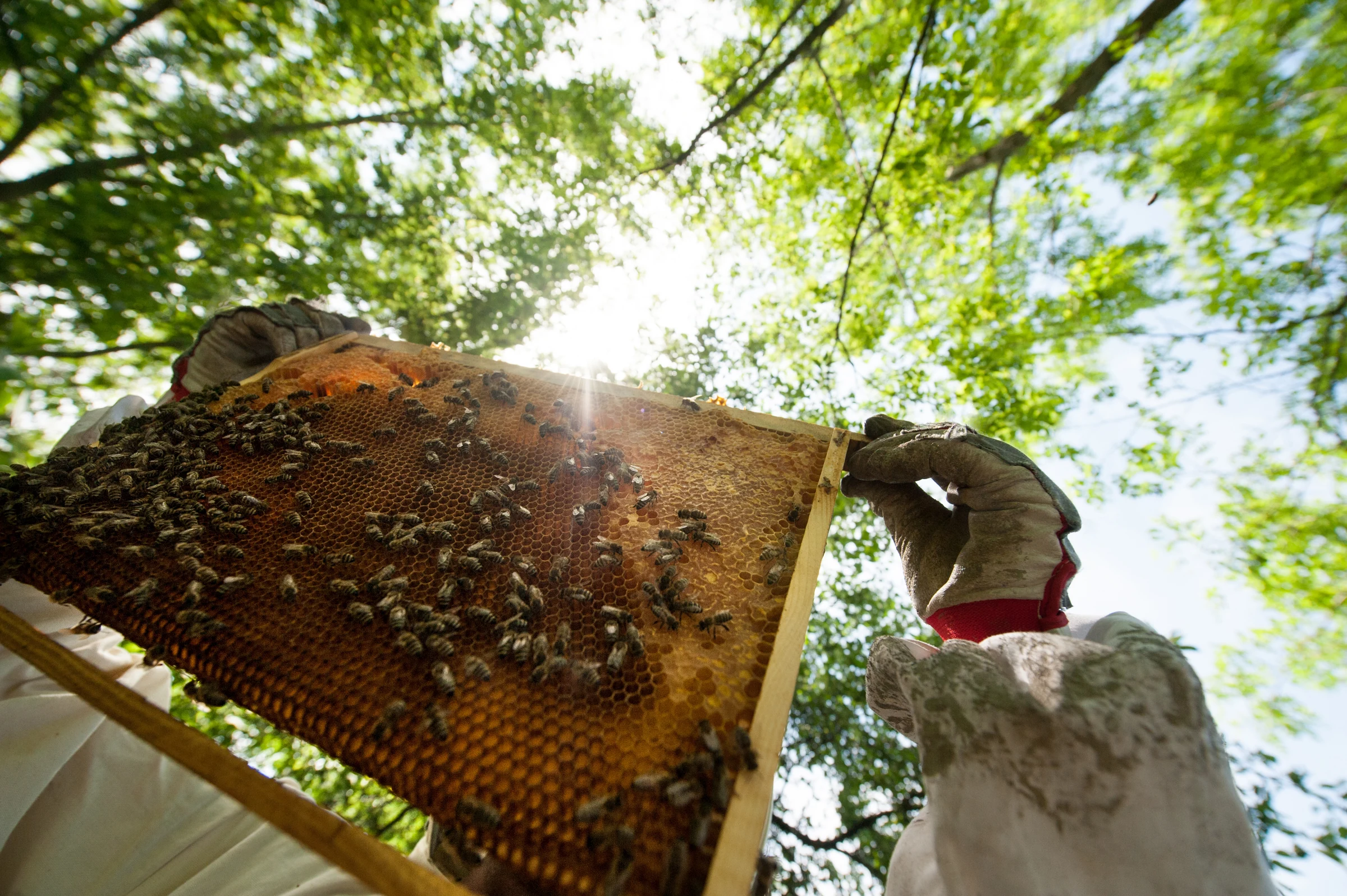
Image temporarily unavailable
🔬 The parallel that still surprises me
The further I progress in both practices, the more connections I see. These are the ones that strike me most:
🌿 Five lessons I apply every day
✦ In conclusion
I do not know whether my bees are better teachers than my clients. I do know that they have made me a better designer. They taught me to slow down in a profession that keeps accelerating, to observe in a reactive world and to respect complex systems instead of trying to simplify them at any cost.
If you are a designer and do not yet have a passion that seems "incompatible" with design, I encourage you to find one. That is often where the best lessons are hidden.
"Beekeeping taught me that patience and observation are not soft qualities—they are technical skills in their own right."